
Why we’re helping young children fall in love with beans
Beans might not always be the first food that comes to mind when we think about children’s favourite foods. But along with the national Bang in Some Beans campaign we think it’s time to change that.
Beans and pulses are nutritional powerhouses. Naturally rich in fibre, a source of plant protein they are a versatile ingredient that can be used in everything from curries and casseroles to pasta dishes and dips. They also have an important role to play in creating a more sustainable food system.
But for us, the focus isn’t just about what beans offer our bodies and our planet. It’s about helping young children become familiar with them, enjoy them and see them as a normal and delicious part of their diet from the very beginning.
Why introduce beans in the early years?
The early years are an incredibly important time for developing food preferences and familiarity with food.
Young children are learning what foods look, smell, feel and taste like and repeated, positive exposure can help build acceptance over time. This is one reason we believe beans shouldn't always be hidden away in sauces or blended into dishes.
At Nursery Kitchen, we want beans to be recognised, not hidden. That's why we deliberately make beans and pulses a hero ingredient in many of our dishes. Take our Greek Beans dish for example which proudly showcases the giant butter bean, or our brilliant baked beans – a twist on the classic jacket potato with baked beans which uses 3 different types of beans. In both dishes the beans stand out as a hero and recognisable ingredient and children do actually eat them!
In total, we include 11 different types of beans and pulses across our menus, giving children opportunities to encounter them in lots of forms, flavours, colours and textures. We don't just want children to tolerate beans. We want them to grow up thinking: ‘I know what that type of bean is. I've eaten it before and I love it!’
That familiarity and passion for beans needs to start early.
Making beans part of the conversation
Food experiences in early years settings aren't just about what's on the plate. Mealtimes and other food education opportunities provide a chance for children to explore food, talk about it and learn from the adults and children around them.
This is why Nursery Kitchen created Dean the Bean! Our very own bean-loving character designed to help early years educators bring beans into everyday conversations.
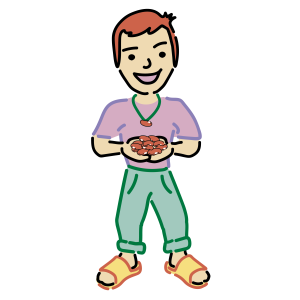
Dean can help early years educators talk about beans in age-appropriate ways focusing on colours, shapes and sizes as well as including a bean game, beans facts and some other bean related vocabulary suggestions. For example
- What colour is your bean?
- What does it feel like?
- Have you tried this type of bean before?
- Which beans can you spot on your plate today?
These simple conversations can help make beans familiar, interesting and fun without putting pressure on children to eat them. Because food acceptance isn't built through pressure. It's built through positive exposure, familiarity and enjoyable experiences.
And sometimes, that might mean a child simply touching a bean, squashing it with their fork or even running on the spot like a ‘runner’ bean!
That's all part of learning.
Beans are a brilliant way to boost fibre
Fibre plays an important role in a healthy diet, supporting normal digestive function and reducing the risk of certain disease such as hear disease, type 2 diabetes and bowel cancer. Yet despite young children having lower fibre requirements than adults, many still aren't getting enough.
The latest National Diet and Nutrition Survey data shows that 78% of children aged 18 months to 3 years aren't meeting the fibre recommendation and an alarming 96% of adults aren't meeting theirs either. So, we're not just talking about a childhood nutrition issue. We're looking at a fibre gap that spans generations.
This isn't about expecting young children to eat huge amounts of high-fibre foods. Their nutritional needs, and portion sizes, are very different from those of adults. Instead, it's about making the foods we offer pack a punch nutritionally and finding simple, delicious ways to build fibre-rich foods into children's diets from the earliest years.
And beans are a fantastic tool! Beans and pulses provide fibre alongside plant protein and a range of vitamins and minerals, making them an incredibly useful ingredient for growing children. They're versatile, affordable and can be incorporated into familiar dishes in ways that help children gradually become comfortable with them.
By introducing beans early and making them a familiar part of children's diets, we can help build healthy eating habits that have the potential to last well beyond the early years.
A win for children and for the planet
Beans and other pulses are plant-based sources of protein and can be used in meals to replace some of the meat or other animal protein. This can help create meals that are both nutritionally valuable and better aligned with the need to reduce the environmental impact of our food choices.
For Nursery Kitchen, this doesn't mean removing meat from children's diets. It means showing children that plants can play an important and delicious role on the plate.
A familiar favourite such as a lasagne, bolognese or curry can become an opportunity to introduce beans alongside other ingredients and, over time, children can become comfortable with meals where beans are the star rather than simply an ingredient in the background.
At Nursery Kitchen, we're putting that philosophy into practice every week. Around 10,000 children enjoy our bean-based dishes across our nursery settings every day, and beans are proving to be a firm favourite. Our three best-selling dishes all contain beans, while our Cowgirl Millie Vegetarian Chilli sits proudly among our top 10 dishes of all time. Packed with borlotti, cannellini and black beans, it’s a great example of how making beans the hero ingredient can create dishes that young children genuinely love.
That's a lot of opportunities for children to meet beans, get to know them and, hopefully, fall in love with them. Because when we introduce children to a wide variety of foods early, we aren't just thinking about what they'll eat today, we're helping shape their relationship with food for the future.


